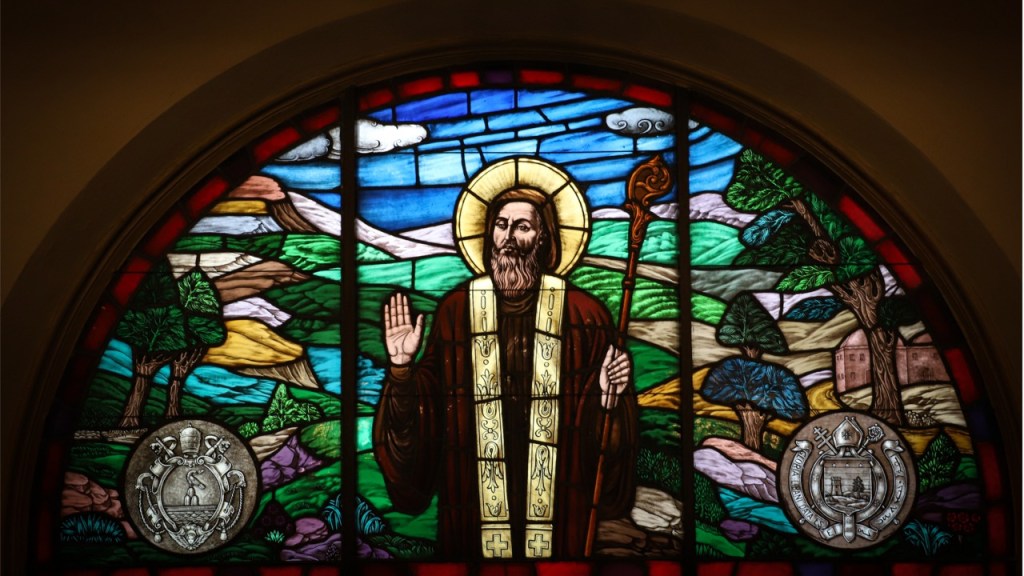
When we talk about the threats facing the Christians of Lebanon today, people often discuss politics or demographic pressures, but we rarely mention something equally dangerous: the cultural erosion of Maronite and Christian identity.
If you want a nation to surrender its freedoms and act against its self-interest, the first step is to erase its identity and make it adopt someone else’s. When you adopt a language and an identity, you don’t just adopt words; you adopt an entire logic. You adopt a culture’s ways of thinking, its lifestyle, and its political causes.
It’s quite simple, really: when you adopt the identity of others, you fight their wars, even when such a war is against your own community.
1. What is Cultural Drift?
The erosion of native identities in the era of globalization is not something new or exclusive to the Christians of Lebanon. However, it accelerated here because regional identitarian waves like Arabism, fused with globalism, and eroded our culture at a faster rate.
However, it is inaccurate to think these currents are coming exclusively from the outside: our Maronite and wider Christian identity in the homeland is eroding from within first.
We can trace this cultural drift across history since the Arab invasion of the Levant in the seventh century up to the 19th century and the establishment of Greater Lebanon, but it’s more meaningful to focus on its consequences today.
The cultural substrates that once distinguished the mountain, like language, rites, communal solidarity, land stewardship, and historical self-awareness, thinned out and are being reinterpreted through newer ideological frames.
2. The Attrition of Language
The first attrition is linguistic and largely invisible for today’s Maronites. While the Maronite Church’s spirituality and liturgy belong to the Syriac-Antiochian tradition, parish life in Lebanon has long migrated toward Arabic. Syriac is increasingly confined to liturgical fragments, clergy training, and heritage circles. Syriac in its modern form was once spoken across the entire mountain, and is the Maronites’ ancestral liturgical matrix, but post–Vatican II reforms accelerated Arabization for pastoral accessibility.
Historical scholarship traces a progressive language shift: Mount Lebanon’s Maronites moved from everyday Aramean-Syriac toward Arabic over centuries. First through diglossic coexistence, then with Arabic predominating in education and print, leaving Syriac largely liturgical or scholarly. Garshuni (Arabic in Syriac script) was a transitional technology in this passage.
Despite the disappearance of Syriac, there is a revivalist counter-current today. Church inscriptions, choirs, and classes that are seeking to reclaim Syriac letters and chant are emerging. Unfortunately, such efforts remain boutique compared to the scale of loss.
3. The Attrition of Self-Awareness
The second attrition is ideational. Across the twentieth century, Christians shaped influential Arab nationalist ideologies. This cross-confessional authorship carried both promise (a civic secular horizon) and risk (a reframing of Christian communal narratives inside a homogenizing Arabist/Islamic story).
Up to 1990, Christians were active members and leaders of Arabist and Leftist movements. The extent of their commitment to their causes was extreme and brought many of them to carry arms against their own community, as we have seen in the civil war.
In the twenty-first century, a different accommodation emerged: segments of the Christian political class entered alliances with Islamist movements as a strategy of protection or leverage within the consociational bargain, like in the alliance between FPM and Hezbollah, or the current alignment between LF and the Syrian Islamic regime. Whatever the justification is, such alignments help normalize sectarian projects and armed vetoes inside the national equation in Lebanon. It recalibrates Christian discourse toward an Islamist vocabulary that contradicts the Maronite older grammar of freedom. These engagements link Christians to causes that are not their own. It displaces the awareness of our main cause with Arabist and leftist issues that do not relate to our destiny or interests.
4. The Problem of Lebanonism
In the meantime, a broader secular turn took place among younger Christians, affecting especially the millennial and Zoomer generations. Some of that was positive with its focus on the rule of law and universal rights. But most was corrosive with its focus on rejecting rooted Maronite identity and embracing universalism, neo-Leftism, and other distractions like gender ideology. This ideological realignment has the same result of obstructing Maronite consciousness and preventing the youth from aligning with the political awareness of their nation’s historic cause.
The most visible effect of this ideology is a kind of quasi-religious “Lebanonism” that attaches itself to coexistence and the Republic above everything else.
Lebanonism is mostly a Christian subculture, despite its proponents’ insistence that it appeals to all sects. It is a kind of nationalism that romanticizes an image of Lebanon that exists only on posters and in fleeting moments of history. The ultimate message of Lebanon in this view is coexistence, not freedom.
Lebanonism espouses a kind of heightened political naivety, thinking that the entire problem of Lebanon is just a corrupt class of politicians. Lebanonists are oblivious to the mechanics that create such a class. They deny the existence or are ignorant of the conflicting narratives and leanings that each Lebanese community has. They assume that everyone is on board with their vision of a united, peaceful Lebanon, except for a few corrupt heads at the top.
Being Christian at its core, Lebanonism is generally blind to the ideological developments in other sects but hyper-aware of trends within the Christian community. This makes it one of the first opponents of restoring proper Maronite and Christian political consciousness.
5. The Impact of Identity Loss
Linguistic loss plus ideological drift yield a measurable outcome: fewer transmission belts and a community that is not aware of its main cause. A nation that is not aware of itself does not try to preserve itself.
Eventually, the Maronites lost the common language and political consciousness that unifies them. They became a fragmented mess of eccentric individuals without a binding community. Consequently, the Maronite spirit of freedom and defiance has been compromised.
When the core community at home loses its identity, the effect will sooner or later reach the diaspora. The community abroad is already subject to cultural drain by factors of geographical distance and cultural integration.
To think clearly about the stakes of identity loss for a small nation, it helps to borrow Albert O. Hirschman’s famous framework: when institutions decline, people choose exit (leave), voice (stay and fight), or some blend constrained by loyalty to others. Hirschman’s caution is surgical: “The presence of the exit alternative can atrophy the development of the art of voice.”
This is exactly what we see at play here as emigration compounds our loss: as our culture thins, our institutions weaken, and all the bonds with the land, with our diaspora, and with each other start to become severed.
When the most capable quietly leave first, those left behind are precisely the ones more likely to be less organized, less connected, and less able to protect institutions and ensure continuity.
This “atrophy of voice” is dangerous in a political system tilted by sectarian majoritarianism. As a result, the Christians get a weaker hand inside the national bargain, and a thinner bench inside the community’s own institutions, political parties, schools, press, clinics, and charities.
6. Rediscovering our Maronite Spirit
This atrophy of the Christian identity in Lebanon must be addressed as an existential threat. It is true that when a Christian emigrates, the community loses a voice at home and gains support abroad. But when immigration is coupled with cultural erasure, the loss is magnified: we lose those who emigrate to distance, and we lose those who stay to despair or the hubris of foreign causes.
In the past few years, the Christian community reacted to the loss of its culture in different ways. Some groups are reviving Syriac while others want to bash homosexuals in the streets. However, the remedy for such an existential issue, such as communal identity, cannot be partial or reactionary. We have to rebuild an entire social and cultural infrastructure that transmits and celebrates our identity. This is as important as any political project.
It must be a long-term process of re-rooting: fund Syriac and education parallel streams in parish schools; establish libraries, think tanks, cultural centers, and digital repositories, and open-source education about our history and cause. Make the culture and heritage of Christians in this Mountain an essential curriculum in our schools. Establish remembrance and cultural days that celebrate our heroes, saints, faith, and survival. Organize pilgrimages and youth groups that nurture and develop bonds with our heritage and homeland, with trainings, pilgrimages, and physical activity.
Most of all, we have to articulate civic Christian politics that understands its own voice and guides the political compass. We have to re-anchor our political narratives and discourse in the historical cause of our nation: the cause of freedom and self-determination.
All Christians of Lebanon should learn and be proud of their long, colorful history in this land and embrace their identities that are rooted in thousands of years of love, bravery, and faith. Maronites especially should rediscover their own spirit and adopt it again without apology.
Without such a work, Maronite identity and Christian culture are at risk of becoming a hollow logo, exported to the diaspora for nostalgia and used by residents as decoration, rather than being a living culture that still sings, teaches, litigates, and governs in its own name.
——————-
This article is an excerpt from The Maronite Cause book Volume I. Our books are available on these links:
The Maronite Cause Volume II – Free PDF edition
The Maronite Cause Volume I – Free PDF edition
The Maronite Cause – Paperback Edition (Amazon)
The Maronite Cause – Kindle ebook Edition (Amazon)
More information can be found on: themaronitecause.com


Leave a Reply